Ceiling water damage
Leak stains, spongy board and ceilings bellying down after a roof, AC-line or plumbing leak. Dried, trimmed to sound board, rebuilt.
Wall and ceiling repair · Decatur County
Leak-stained ceilings, tape seams lifting in the heat, holes and crushed corners: repaired, blended into the surrounding texture and returned paint-ready.
Call or text the details. A nearby drywall contractor sizes up what you send and prices it ahead of any cutting.
How we work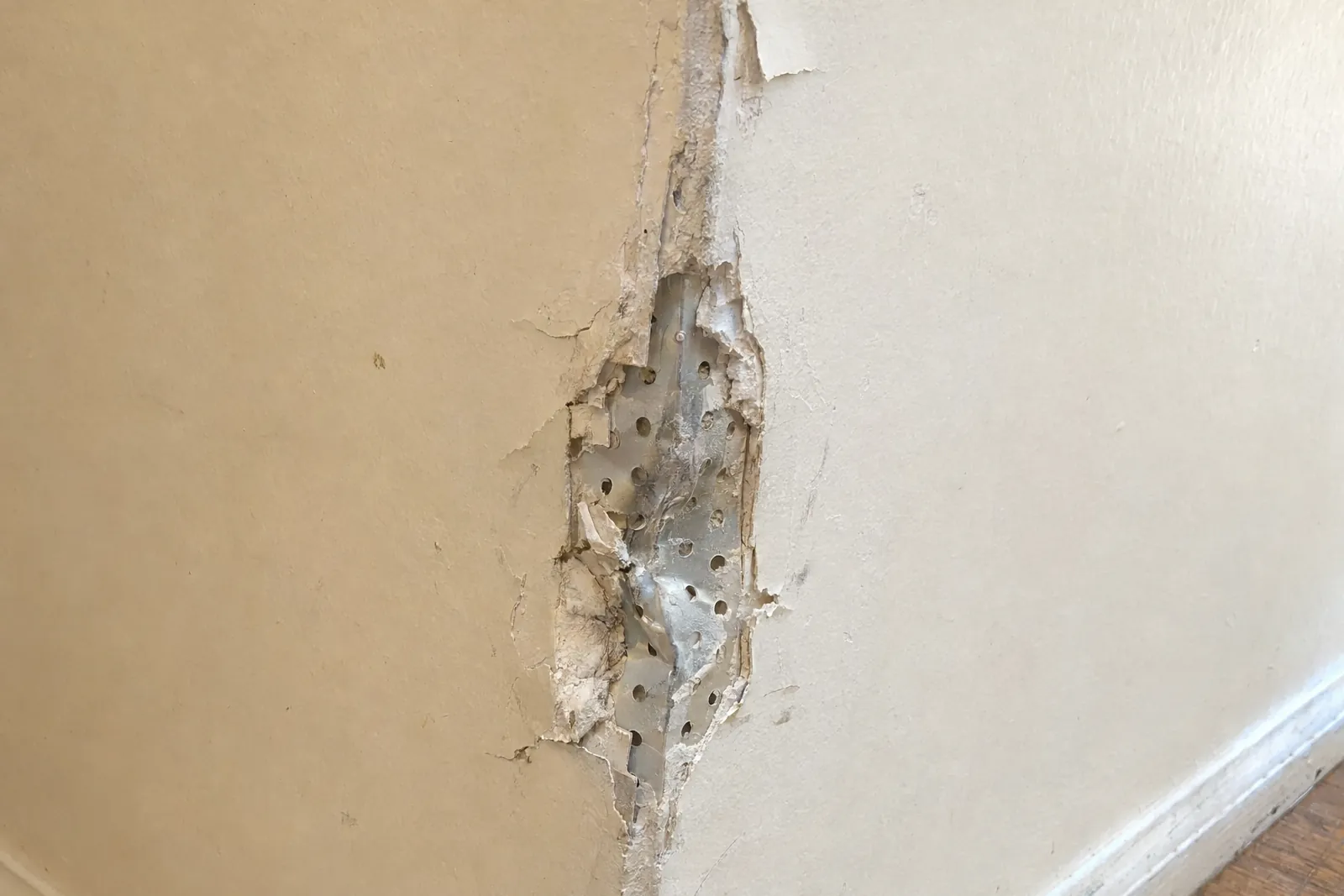
Bainbridge, GA runs hot. NOAA's 1991–2020 normals for Bainbridge, GA put the average daily high above 90°F in June, July and August, with July on top at 92.8°F. Air conditioning runs for months on end. Every open door lets warm outdoor air meet a chilled room.
Joint tape takes the strain. A seam bedded on too little mud starts to loosen under that cycle. It shows as a raised line, a blister along the joint or a crack running down the tape edge.
Storm season is the other half. Hurricane Michael came through on October 10, 2018 and left structural damage across the city, plus downed trees and power lines. Any hard rain can push water under shingles or flashing. Indoors, the first sign is a coffee-brown blotch overhead. Then a soft spot. Then a sag.
Ceiling holding water? First, flip the breaker that feeds the ceiling lights and fan in that room. After that, clear the room underneath, put a bucket down and get the roof or pipe looked at. Call us about the ceiling once the water has somewhere to go.
Three kinds of repair cover most wall and ceiling damage. Pick the closest one; the quote sorts out the rest.
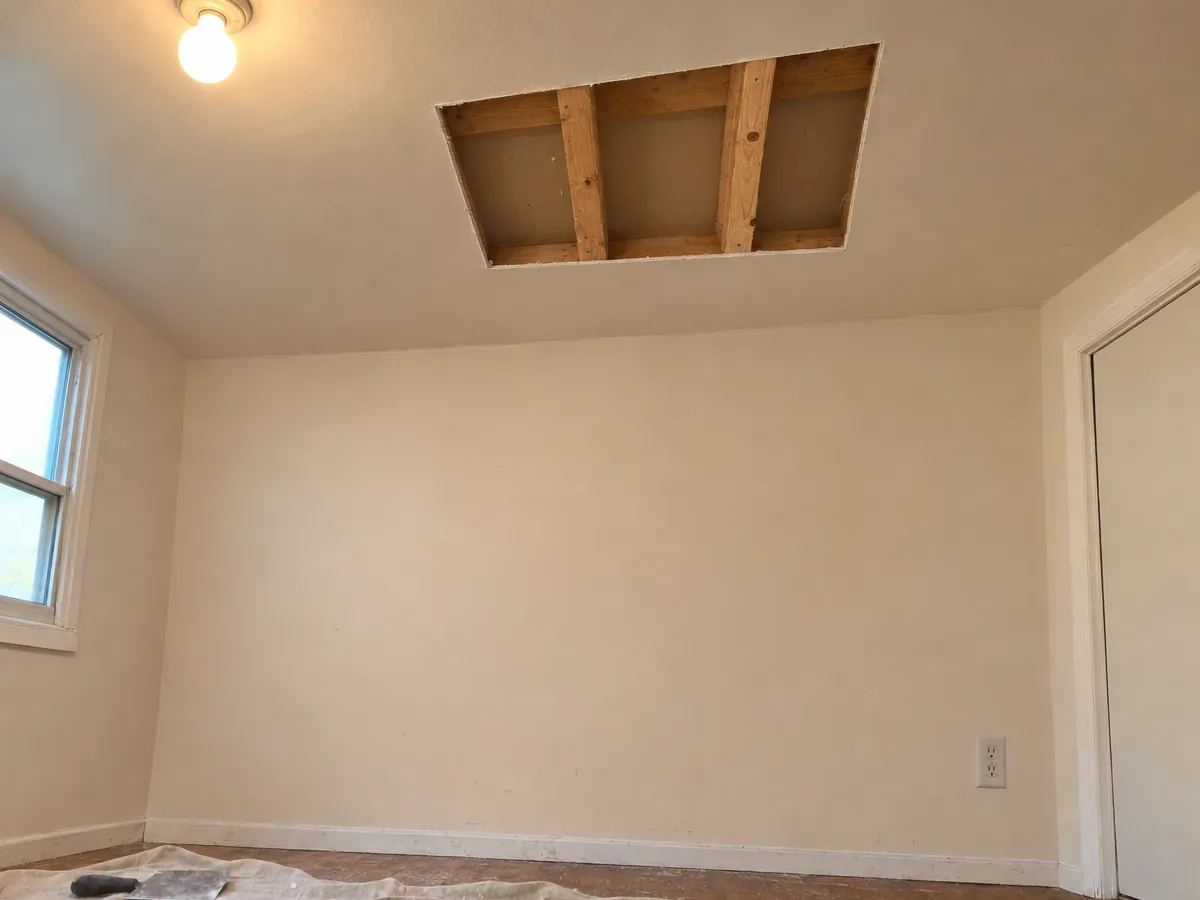
Leak stains, spongy board and ceilings bellying down after a roof, AC-line or plumbing leak. Dried, trimmed to sound board, rebuilt.
Tape lifting along a joint, bubbles, hairlines at corners and diagonal cracks running off door and window frames.
Doorknob punches, pulled anchors, old outlet openings and crushed outside corners, patched and blended into the wall.
Size decides the number of coats, the drying time between them and how many trips the job needs. Cost follows the same scale.
Nail pops, screw holes, dents, hairline cracks under a foot long.
Filled, sanded and recoated. Usually one trip with a short dry between coats. Texture is a small blend and touch-up paint often covers it.
Doorknob holes, fist-size damage, a cracked stretch of corner bead, a few feet of loose tape.
Needs backing or a patch piece, then three coats with sanding between. Expect two trips, because each coat has to dry. Texture is rebuilt over the patch and a wider area is primed.
Ceiling sections after a leak, long seam runs, openings wider than a foot.
Board cut back to framing, new board screwed in, taped and coated several times, texture carried across the area. Several trips. Painting the whole wall or ceiling plane usually gives the cleanest finish.
For the full breakdown, read our guide on what pushes a drywall repair quote up or down. It covers size, height, texture, moisture and paint without guessing at numbers.
Landlords walk a unit with a checklist. Listing photos catch every shadow on a seam. Order matters: drywall first, paint second, photos or inspection last.
Tell us the move-out date or the photo date when you call. The schedule gets built backward from it, with drying time and a gap for painters.
What can wait: tiny picture-nail holes, if the lease allows them. A dab of filler and the paint coat usually handle those.
Sanding dust is fine and it travels. A proper drywall repair sets up before any compound comes out: canvas or paper runners over the floor, furniture shifted or wrapped in plastic, supply vents and returns taped over so dust does not ride the ductwork through the house.
Bigger jobs, like a ceiling section, get a zip-door or a taped plastic sheet over the doorway. Damp-sponge sanding, or a vacuum-fed sander, keeps the air clearer.
Your part: pull furniture back a good arm's length from the wall, take pictures down, move small items and shut pets away. Ask the pro how dust will be handled before you book. A clear answer is a good sign.
New mud takes paint unevenly next to painted board. Skip the primer and the patch reads as a flat or glossy square under side light. That is flashing.
The fix is order. Texture goes on first, whether smooth, orange peel or knockdown. Then the patch, plus a border of the old wall, gets primer, a stain-blocking one wherever there was a water mark. Then paint goes on the full wall, corner to corner, not as a dab over the spot.
Sheen matters too. Flat ceiling paint hides a lot. Eggshell and satin walls show more, so a full-wall coat is the safer call there.
Who paints? Repairs finish at primer. You or your painter can take it from there, or ask the pro whether paint can go into the quote. Have the paint can or the color code handy if you still have it.
Decatur County's seat is Bainbridge, GA. Repairs fan out from there along U.S. 84 and U.S. 27.
Climax. Ten miles east of town on U.S. 84.
Whigham. Further east on U.S. 84, which runs through the middle of Whigham as Broad Avenue.
Cairo. The Grady County seat, at the east end of this stretch of U.S. 84.
Attapulgus. South-southeast, close to the Florida line, with U.S. 27 running past it.
Brinson. Northwest of the city on U.S. 84.
Iron City. Northwest, in neighboring Seminole County.
Donalsonville. The Seminole County seat, northwest past Iron City.
Usually, yes. Smooth, orange peel and knockdown are all rebuilt by hand or with a hopper over the patch. Send a close photo in good light and mention the texture when you call.
Yes. Small jobs get quoted like any other. Bundle a few spots into one booking if you can; the trip goes further.
Far less likely when it is primed and the whole wall gets paint. A spot dab over bare compound is what usually shows. The section on primer and sheen above explains why.
Small fills can wrap in one trip. Tape or new board means coats that cure apart, so figure on two trips or more. Hot, muggy days stretch the drying.
Some, kept low: floors covered, vents taped, damp sanding or a vacuum sander. Ask the pro which method the quote includes.
Flip the breaker feeding any ceiling fixture near the sag. Then get everybody out of that room. Call about the source next, then about the board.
Rewiring leaves square holes at outlets and switches. Plumbers open the wall to reach a mixing valve. HVAC work relocates a thermostat or a return grille. Low-voltage installs leave holes for cable runs.
Wait until the trade is done and any required inspection has passed. Then book the patch. Closing a wall early means opening it again.
A proper close-up: the opening squared off, wood backing added where there is no stud to screw to, new board fastened, taped, coated, textured and primed. For a plumbing valve someone may need to reach again, a hinged or screw-on access panel can beat solid board; raise it on the call.
The shared wall and ceiling of an attached garage are often built with fire-rated board. A repair there should keep that: the same type of board, every joint taped. Ask for it by name.
Garage walls take hits. Car doors, bikes, mowers, ladders. Corners crush and the bead bends. Those get cut out and rebuilt, not just filled.
Water is the other problem. Board along the slab wicks moisture after a storm. A below-grade room takes on damp from the ground. If the bottom edge is soft or stained, the source gets fixed and the area dries out first. Board that stayed wet gets replaced, never painted over.
Phone it in, text over a picture, or fill out the request page. Price first, work second, then a repair window fitted around your week.
Want the full picture first? Read how a repair gets booked here.
Once you reach out, an area drywall contractor returns the call, hears the details and pencils in the quote.
Text the details Check availability online